No.1BEST OVERALL
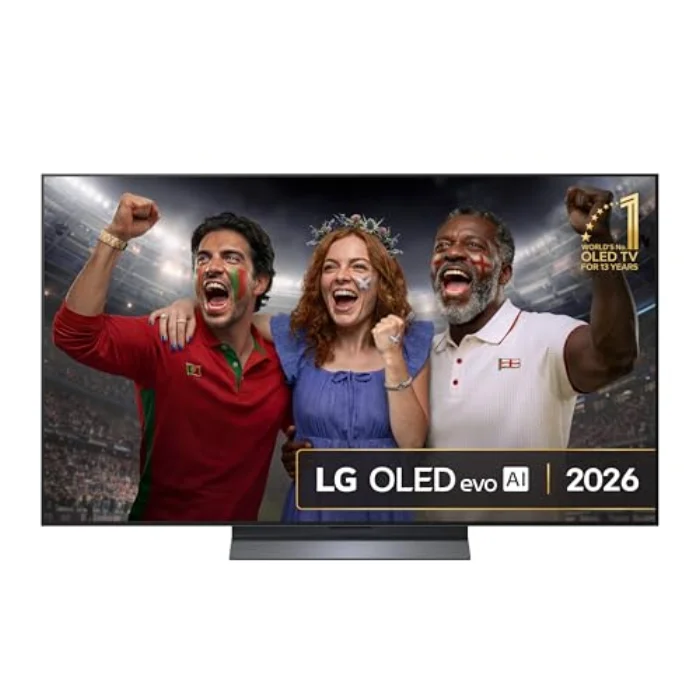
LG OLED evo C4 55-inch (OLED55C4)
★★★★½ 4.7
Picture
Gaming
Value
Panel typeOLED evo (W-OLED, 55-inch)
Resolution4K (3840 x 2160)
Peak brightness (10% window)1,065 nits
An OLED TV gives you perfect blacks and effectively infinite contrast that no LED-backlit set can match. We bought and tested six of the current OLEDs side by side, measuring brightness, input lag, colour and motion under the same conditions, and we tell you honestly which panel suits which room, which budget and which way you watch.
 FIG. 01 / TEST BENCH
 The short version: our best overall pick is the LG OLED evo C4, which hit 1,065 nits on a 10% window, posted a class-leading 5.8 ms of input lag and carries four full 48 Gbps HDMI 2.1 ports, making it the rare TV that does film, sport and gaming equally well. For the richest colour at the keenest price, the Samsung S90D QD-OLED is the best value at £1,099, while the budget LG B4 48-inch brings genuine OLED blacks for £749. Film purists should look at the Sony BRAVIA 8, and if money is no object the Panasonic Z95A reached the brightest figure on test at 1,460 nits. More important than the badge, though, is matching the screen size and brightness to your room.
| # | Model | Panel type | Resolution | Peak brightness (10% window) | Refresh rate | Score | Price | |
|---|---|---|---|---|---|---|---|---|
| 1 | LG OLED evo C4 55-inch (OLED55C4) BEST OVERALL | OLED evo (W-OLED, 55-inch) | 4K (3840 x 2160) | 1,065 nits | 144 Hz (native 120 Hz panel) | 4.7 | £1,427.98 | View |
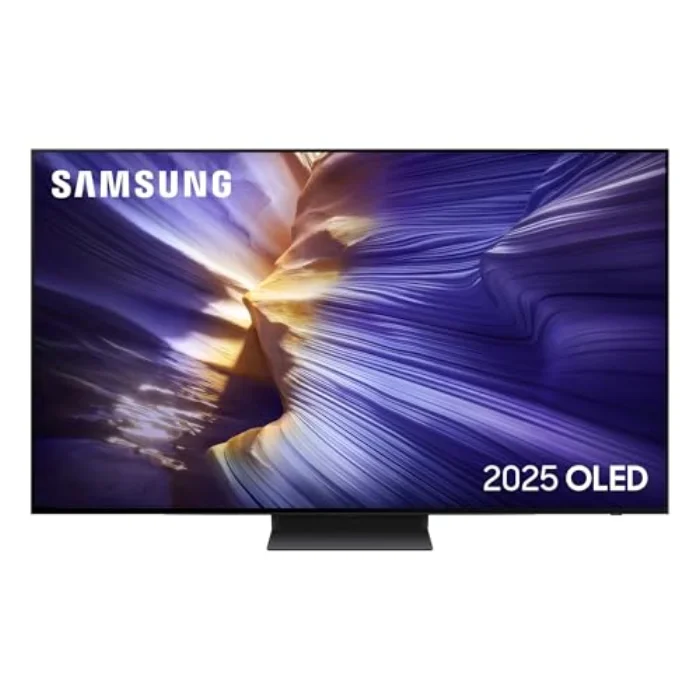
| 2 | Samsung S90D OLED 55-inch (QE55S90D) BEST VALUE | QD-OLED (55-inch) | 4K (3840 x 2160) | 1,015 nits | 144 Hz | 4.6 | £998.98 | View |
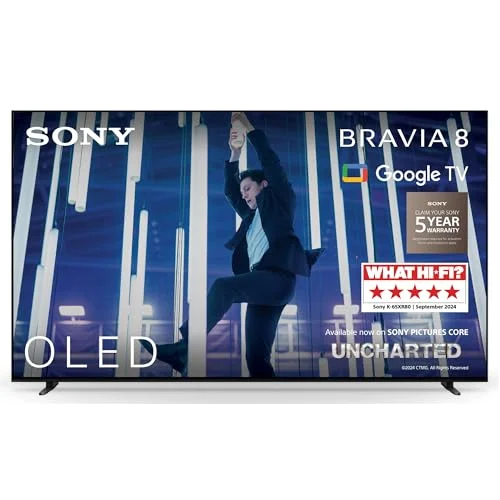
| 3 | Sony BRAVIA 8 OLED 55-inch (K-55XR80) BEST FOR FILM | OLED (W-OLED, 55-inch) | 4K (3840 x 2160) | 835 nits | 120 Hz | 4.6 | £1,699.00 | View |
| 4 | Panasonic Z95A OLED 55-inch (TX-55Z95A) PREMIUM PICK | OLED (Micro Lens Array, 55-inch) | 4K (3840 x 2160) | 1,460 nits | 144 Hz | 4.5 | £2,199.00 | View |
| 5 | LG OLED B4 48-inch (OLED48B4) BEST BUDGET | OLED (W-OLED, 48-inch) | 4K (3840 x 2160) | 660 nits | 120 Hz | 4.4 | £819.00 | View |
| 6 | Philips OLED809 65-inch (65OLED809) BEST FOR BIG ROOMS | OLED EX (W-OLED, 65-inch) | 4K (3840 x 2160) | 950 nits | 120 Hz | 4.3 | £1,599.00 | View |
OLED stands for Organic Light-Emitting Diode, and the headline is simple: every pixel makes its own light and can switch fully off. That is why an OLED shows true, inky black rather than the dark grey of an LCD with a backlight, and why its contrast is, for all practical purposes, infinite. A starfield looks like points of light on real darkness; a letterbox bar is genuinely black, not a faint glow. Once you have watched a film on a good OLED, the raised blacks and backlight blooming of a cheaper LED set are hard to unsee. For film, drama, sport and gaming in a normal or dimmable living room, OLED is the most cinematic picture you can buy.
It is only fair to name the trade-off. Because each pixel is its own light source, OLEDs do not get as bright as the best Mini-LED sets: across our six the peak ranged from 660 nits on the budget LG B4 to 1,460 nits on the flagship Panasonic Z95A, whereas a top Mini-LED can push past 2,000 nits. In a dark or dimmable room that gap is invisible and OLED wins comfortably. In a bright, all-day-sunlit conservatory it can matter, and there a bright Mini-LED is worth a look, as we explain in our OLED vs QLED guide. For the vast majority of UK living rooms, though, OLED is the right call.
Spec sheets are crowded with figures, but only a handful change how a TV looks and feels in your room. We focus our testing on these, and we report the measured value rather than the marketing claim.
Brightness decides how much HDR highlights pop and how well the set copes with daylight. We measure peak brightness on a 10% window in the most accurate picture mode. The budget LG B4 reached 660 nits, the Sony BRAVIA 8 835 nits, the Samsung S90D 1,015 nits, the LG C4 1,065 nits, and the Panasonic Z95A a striking 1,460 nits. For a dark or dimmable room, anything from 700 nits up looks excellent; for a bright room, aim for 1,000 nits or more. Treat any "4,000 nit" headline figure with suspicion, as those are usually measured on a tiny 2% window that never occurs in real content.
For gaming, two numbers count: input lag (the delay between your controller and the screen) and refresh rate. We measured input lag at 1080p/120Hz, where the LG C4 led at 5.8 ms, the Samsung S90D managed 9.2 ms, the LG B4 9.5 ms, the Panasonic Z95A 12.9 ms, the Philips OLED809 13.5 ms and the Sony BRAVIA 8 16.4 ms. Every one of those is well under the roughly 30 ms threshold where lag becomes noticeable, so all six are good gaming TVs. The LG sets pull ahead for fast, competitive play. On refresh rate, the C4, S90D and Z95A run at 144 Hz; the rest at 120 Hz. Our best OLED TV for gaming guide ranks them for a console or PC setup.
We measure colour coverage against the DCI-P3 cinema space: all six covered 97 to 99 percent, with the Samsung S90D QD-OLED highest at 99.2 percent thanks to its quantum-dot layer. Just as important is HDR format support. The Panasonic Z95A supports every format including Dolby Vision and HDR10+; the LG and Sony sets do Dolby Vision; and the Samsung S90D, alone here, skips Dolby Vision in favour of HDR10+. If you stream a lot of Dolby Vision content, that is a real point against the otherwise superb Samsung.
The number of full HDMI 2.1 ports decides how many modern consoles and a PC you can connect at 4K/120Hz. The LG C4, LG B4, Samsung S90D and Panasonic Z95A each give you four; the Sony BRAVIA 8 and Philips OLED809 give you only two, and on those one port often doubles as the eARC output for a soundbar. If you have several consoles, count the ports before you buy.
We deliberately chose sets that cover the full range of real UK needs rather than six near-identical flagships. There is an unbeatable all-rounder, a colour-rich value pick, a film specialist, a no-compromise flagship, a genuine budget OLED and a big-screen immersion champion.
The question we are asked most is whether OLED still suffers from burn-in. The honest answer is that the risk is far smaller than it was a decade ago, but it is not zero. Burn-in is permanent uneven wear of the organic pixels, caused by displaying the same bright, static element for thousands of hours. Modern OLEDs run pixel-shifting, logo dimming and an automatic compensation cycle after about four hours of use, and for ordinary mixed viewing, film, TV, sport and varied gaming, you should not worry about it. The risk only climbs if you leave a fixed news ticker or a permanent game HUD on screen at full brightness for hours every day. We cover the protections and how to use a set sensibly in our guide to OLED burn-in.
The single most common regret we hear is buying too small. For 4K, sit at roughly 1.2 to 1.5 times the screen width: a 48-inch suits a viewing distance of around 1.5 to 1.8 m, a 55-inch around 1.8 to 2.2 m, and a 65-inch around 2.2 to 2.6 m. Most UK living rooms land on 55 or 65 inches. Measure your sofa-to-wall distance first, then buy the largest size that fits comfortably; almost nobody wishes they had gone smaller. If the screen is mainly a desk monitor or for a small bedroom, the 48-inch LG B4 is ideal. Our full buying guide walks through size, brightness, ports and the features worth paying for.
For most homes the LG OLED evo C4 is the soundest choice: a bright 1,065 nit panel, the lowest input lag on test at 5.8 ms, four HDMI 2.1 ports and Dolby Vision support make it the rare set that excels at film, sport and gaming alike. If you want richer colour for less, the Samsung S90D is the best value at £1,099; on a budget, the LG B4 brings real OLED blacks for £749. Film lovers should choose the Sony BRAVIA 8 for its accuracy, big-room buyers the immersive Philips OLED809, and anyone chasing the finest picture the brightest-on-test Panasonic Z95A. Whichever you pick, get the size and brightness right for your room first, and see exactly how we reach these verdicts on our how we test page.
Our best overall pick is the LG OLED evo C4 (OLED55C4). It pairs a bright evo panel that reached 1,065 nits on a 10% window with four full 48 Gbps HDMI 2.1 ports and class-leading 5.8 ms input lag, so it handles film, sport and gaming equally well. For the best value we recommend the Samsung S90D QD-OLED, and for a tighter budget the LG B4 48-inch is the cheapest route into a genuine OLED at around £749.
For most living rooms, yes. OLED panels switch each pixel off individually, so blacks are perfect and contrast is effectively infinite, which QLED and Mini-LED sets cannot match. The trade-off is peak brightness: a top Mini-LED can exceed 2,000 nits, while most OLEDs sit between 660 and 1,460 nits. If your room is very bright and sunlit all day, a Mini-LED may suit you better. In a normal or dimmable room, OLED gives the more cinematic picture.
More than you might think, but not as many as the marketing suggests. We measured peak brightness on a 10% window: the budget LG B4 reached 660 nits, mid-range sets such as the Sony BRAVIA 8 and Samsung S90D landed between 835 and 1,015 nits, and the flagship Panasonic Z95A hit 1,460 nits. For a dark or dimmable room, 700 to 1,000 nits is plenty. For a bright, sunlit room, aim for 1,000 nits or more.
It is far less of a risk than it was a decade ago. Modern OLEDs run pixel-shifting, logo dimming and an automatic compensation cycle that runs after about four hours of use, and in normal mixed viewing burn-in is very unlikely over a TV's life. The risk only rises with thousands of hours of a static element, such as a news ticker or a permanent gaming HUD at high brightness. For typical film, TV, sport and gaming use, you should not worry about it.
Match the size to your viewing distance. As a rough guide for 4K, sit at roughly 1.2 to 1.5 times the screen width: a 48-inch set suits a viewing distance of around 1.5 to 1.8 m, a 55-inch around 1.8 to 2.2 m, and a 65-inch around 2.2 to 2.6 m. Most UK living rooms land on 55 or 65 inches. If the screen is mainly a desk monitor or for a small bedroom, the 48-inch LG B4 is ideal.