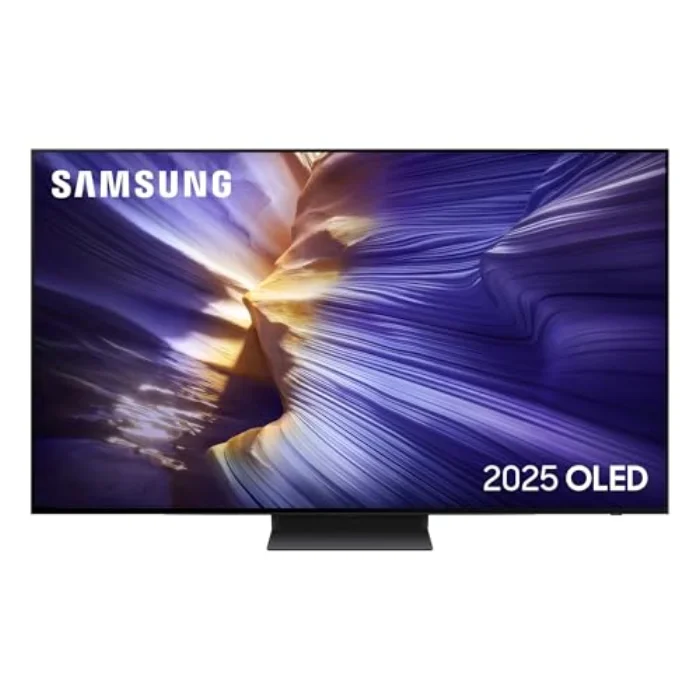
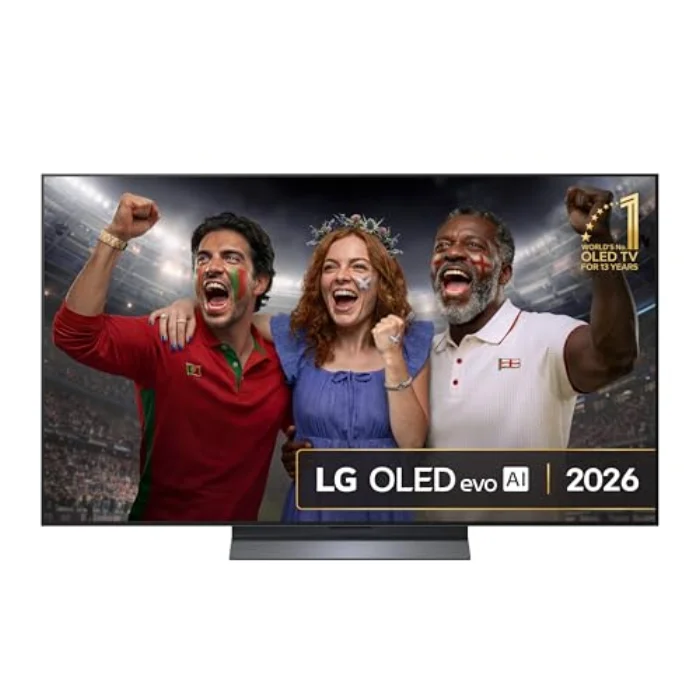
This is the most common dilemma in OLED right now. The LG C4 is our best overall pick; the Samsung S90D is our best value pick. Both are superb, and you would be happy with either, so the decision comes down to a few specific differences in panel type, colour, gaming and HDR support. We measured both on the same bench under the same conditions, so the numbers below are directly comparable.
The numbers side by side
The two sets are remarkably close on the headline figures. The C4 reached 1,065 nits to the S90D 1,015 nits, a 50 nit gap that is invisible in normal viewing. The S90D QD-OLED panel covered 99.2 percent of DCI-P3 to the C4 98.5 percent, a small but real edge in colour volume. On input lag the C4 led with 5.8 ms against the S90D 9.2 ms, both excellent. Both run at 144 Hz and both carry four full 48 Gbps HDMI 2.1 ports. Here are the full spec sheets for each.
LG OLED evo C4 specifications
Full specifications: LG OLED evo C4 55-inch (OLED55C4) | Panel type | OLED evo (W-OLED, 55-inch) |
| Resolution | 4K (3840 x 2160) |
| Peak brightness (10% window) | 1,065 nits |
| Refresh rate | 144 Hz (native 120 Hz panel) |
| Input lag (1080p/120Hz) | 5.8 ms |
| HDMI 2.1 ports | 4 (all 48 Gbps) |
| Colour gamut (DCI-P3) | 98.5% |
| Smart platform | webOS 24 |
| Our rating | 4.7 / 5 |
| Typical UK price | £1,427.98 |
Samsung S90D specifications
Full specifications: Samsung S90D OLED 55-inch (QE55S90D) | Panel type | QD-OLED (55-inch) |
| Resolution | 4K (3840 x 2160) |
| Peak brightness (10% window) | 1,015 nits |
| Refresh rate | 144 Hz |
| Input lag (1080p/120Hz) | 9.2 ms |
| HDMI 2.1 ports | 4 (all 48 Gbps) |
| Colour gamut (DCI-P3) | 99.2% |
| Smart platform | Tizen (2024) |
| Our rating | 4.6 / 5 |
| Typical UK price | £998.98 |
Picture: W-OLED brightness versus QD-OLED colour
The core difference is the panel. The C4 uses an evo W-OLED panel; the S90D uses QD-OLED, which adds a quantum-dot colour layer. In practice the C4 has a hair more raw peak white (1,065 vs 1,015 nits), while the S90D produces richer, more saturated colour that holds at high brightness, which is why vivid HDR scenes look slightly more luminous on the Samsung. In a side-by-side, the S90D pops more on colourful content and the C4 looks marginally cleaner in very bright highlights. Both have perfect OLED blacks, although in a bright room the QD-OLED panel can show a faint magenta tint to deep shadow that the C4 avoids. For most viewers it is a wash; colour enthusiasts lean S90D.
HDR formats: the C4 decisive advantage
This is the clearest separator. The C4 supports Dolby Vision; the S90D does not, backing HDR10+ instead. A great deal of streaming content is mastered in Dolby Vision, so on those titles the S90D drops to standard HDR10 while the C4 shows the full Dolby Vision grade. If you watch a lot of Dolby Vision content, this alone may decide it for the C4. If you mostly watch HDR10+ or standard HDR, it is a non-issue.
Gaming: the C4 noses ahead
Both are excellent gaming TVs with four HDMI 2.1 ports, 144 Hz, VRR and ALLM. The C4 leads on two fronts: 5.8 ms of input lag against the S90D 9.2 ms, and the more mature webOS Game Optimiser interface. The difference is small and the S90D is still a top-tier gaming set, but for a dedicated, competitive gamer the C4 is the safer pick. The S90D counters with its Gaming Hub, which offers cloud gaming without a console, handy if you do not own one.
Price and value
At the time of writing the S90D sits at £1,099 to the C4 £1,199, so the Samsung is £100 cheaper and gets you the wider colour gamut. The C4 premium buys Dolby Vision, slightly lower input lag and the brighter raw highlights. Neither is poor value; the S90D is the keener buy on pure pounds-per-quality, the C4 the more complete set.
Which should you buy?
Choose the LG C4 if you want the most complete all-rounder, watch Dolby Vision content, or game seriously, where its 5.8 ms input lag and webOS interface lead. Choose the Samsung S90D if vivid, saturated colour is your priority, you watch mainly HDR10+ or standard HDR, and you want to save £100. Both are outstanding, so there is no wrong answer here; the C4 is our overall winner for its balance and Dolby Vision support, while the S90D is our value champion. If neither quite fits, our full best OLED TV ranking covers four more options, and the OLED vs QLED guide explains how QD-OLED sits in the wider market.