The best OLED TV for gaming: input lag and HDMI 2.1 tested

OLED is the best TV technology for gaming: near-instant pixel response means almost no motion blur, and perfect blacks make dark games look superb. We measured input lag on all six OLEDs and counted their HDMI 2.1 ports. The LG C4 leads at 5.8 ms; the LG B4 is the value pick.

Transparency: This article contains affiliate links. If you buy through one of them, we may earn a commission, at no extra cost to you. That is how we fund our testing and keep this site independent. More about how we test.

Contents

Our selection

Model Price Panel typeResolutionPeak brightness (10% window) Rating Link
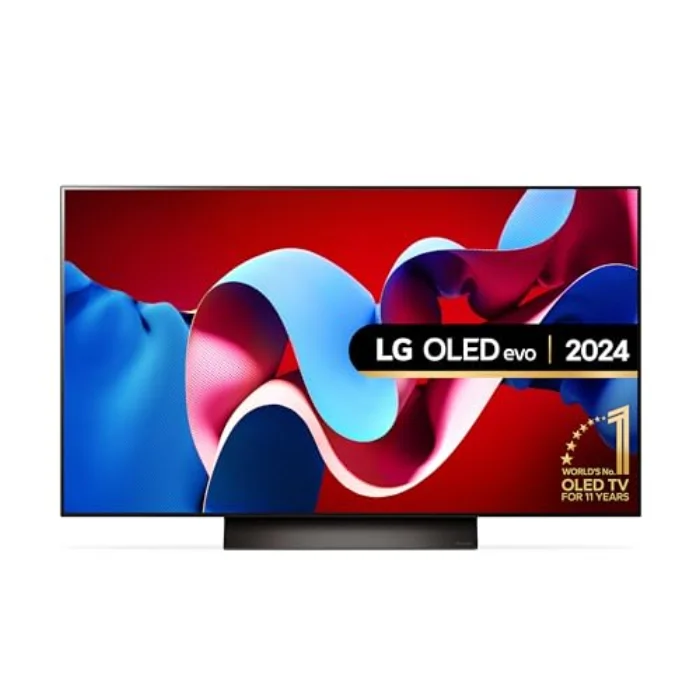
LG OLED evo C4 55-inch (OLED55C4) ★ Top pick LG OLED evo C4 55-inch (OLED55C4) £1,427.98 OLED evo (W-OLED, 55-inch)4K (3840 x 2160)1,065 nits ★ 4.7 View →
Samsung S90D OLED 55-inch (QE55S90D) Samsung S90D OLED 55-inch (QE55S90D) £998.98 QD-OLED (55-inch)4K (3840 x 2160)1,015 nits ★ 4.6 View →
Sony BRAVIA 8 OLED 55-inch (K-55XR80) Sony BRAVIA 8 OLED 55-inch (K-55XR80) £1,483.00 OLED (W-OLED, 55-inch)4K (3840 x 2160)835 nits ★ 4.6 View →
Panasonic Z95A OLED 55-inch (TX-55Z95A) Panasonic Z95A OLED 55-inch (TX-55Z95A) £2,199.00 OLED (Micro Lens Array, 55-inch)4K (3840 x 2160)1,460 nits ★ 4.5 View →
LG OLED B4 48-inch (OLED48B4) LG OLED B4 48-inch (OLED48B4) £819.00 OLED (W-OLED, 48-inch)4K (3840 x 2160)660 nits ★ 4.4 View →
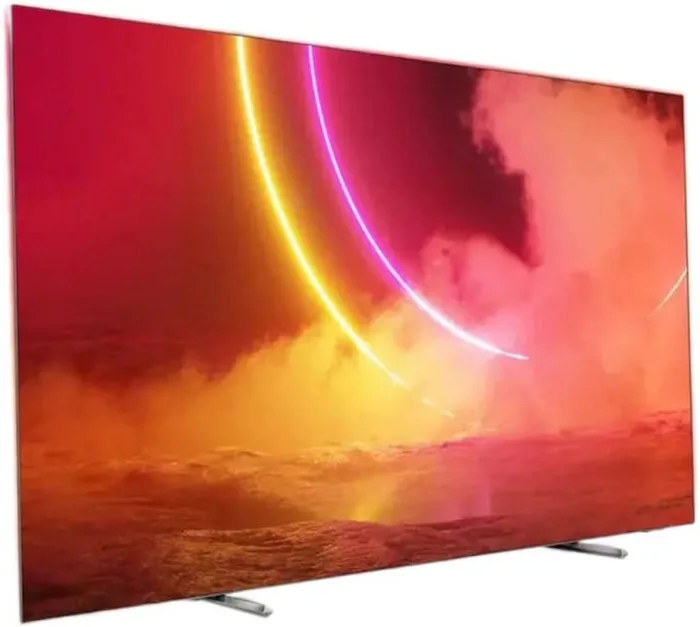
Philips OLED809 65-inch (65OLED809) Philips OLED809 65-inch (65OLED809) £1,599.00 OLED EX (W-OLED, 65-inch)4K (3840 x 2160)950 nits ★ 4.3 View →
★ Top pick
LG OLED evo C4 55-inch (OLED55C4) £1,427.98
Panel type : OLED evo (W-OLED, 55-inch)Resolution : 4K (3840 x 2160)Peak brightness (10% window) : 1,065 nits ★ 4.7/5
View on Amazon →
Samsung S90D OLED 55-inch (QE55S90D) £998.98
Panel type : QD-OLED (55-inch)Resolution : 4K (3840 x 2160)Peak brightness (10% window) : 1,015 nits ★ 4.6/5
View on Amazon →
Sony BRAVIA 8 OLED 55-inch (K-55XR80) £1,483.00
Panel type : OLED (W-OLED, 55-inch)Resolution : 4K (3840 x 2160)Peak brightness (10% window) : 835 nits ★ 4.6/5
View on Amazon →
Panasonic Z95A OLED 55-inch (TX-55Z95A) £2,199.00
Panel type : OLED (Micro Lens Array, 55-inch)Resolution : 4K (3840 x 2160)Peak brightness (10% window) : 1,460 nits ★ 4.5/5
View on Amazon →
LG OLED B4 48-inch (OLED48B4) £819.00
Panel type : OLED (W-OLED, 48-inch)Resolution : 4K (3840 x 2160)Peak brightness (10% window) : 660 nits ★ 4.4/5
View on Amazon →
Philips OLED809 65-inch (65OLED809) £1,599.00
Panel type : OLED EX (W-OLED, 65-inch)Resolution : 4K (3840 x 2160)Peak brightness (10% window) : 950 nits ★ 4.3/5
View on Amazon →
BEST OVERALL
LG OLED evo C4 55-inch (OLED55C4) - OLED TV LG

LG OLED evo C4 55-inch (OLED55C4)

4.7/5

£1,427.98 £1,399.00

OLED evo (W-OLED, 55-inch) · 4K (3840 x 2160) · 1,065 nits

  • The most complete all-rounder we tested
  • Four full HDMI 2.1 ports for gaming
  • Brighter evo panel than older C-series
  • Excellent 5.8 ms input lag
  • Stand wobbles slightly on a unit
  • No built-in satellite tuner
Picture 5/5
Gaming 5/5
Value 4/5
View on Amazon →
BEST VALUE
Samsung S90D OLED 55-inch (QE55S90D) - OLED TV Samsung

Samsung S90D OLED 55-inch (QE55S90D)

4.6/5

£998.98 £1,299.00

QD-OLED (55-inch) · 4K (3840 x 2160) · 1,015 nits

  • QD-OLED colour volume is superb
  • Brilliant for bright rooms
  • Four HDMI 2.1 ports
  • Strong value at this price
  • No Dolby Vision HDR support
  • Tizen ads on the home screen
Picture 5/5
Gaming 4/5
Value 5/5
View on Amazon →
BEST FOR FILM
Sony BRAVIA 8 OLED 55-inch (K-55XR80) - OLED TV Sony

Sony BRAVIA 8 OLED 55-inch (K-55XR80)

4.6/5

£1,483.00

OLED (W-OLED, 55-inch) · 4K (3840 x 2160) · 835 nits

  • The most natural, film-accurate picture
  • Outstanding upscaling of SD and HD sources
  • Acoustic Surface audio is genuinely good
  • Excellent out-of-the-box accuracy
  • Only two HDMI 2.1 ports
  • Dimmer than the LG and Samsung
Picture 5/5
Gaming 3/5
Value 3/5
View on Amazon →
PREMIUM PICK
Panasonic Z95A OLED 55-inch (TX-55Z95A) - OLED TV Panasonic

Panasonic Z95A OLED 55-inch (TX-55Z95A)

4.5/5

£2,199.00

OLED (Micro Lens Array, 55-inch) · 4K (3840 x 2160) · 1,460 nits

  • The brightest OLED on test at 1,460 nits
  • Reference-grade tuning and accuracy
  • Built-in 360 Soundscape Pro speakers
  • Supports Dolby Vision and HDR10+
  • Expensive at £2,199
  • Fire TV is a busier interface
Picture 5/5
Gaming 4/5
Value 3/5
View on Amazon →
BEST BUDGET
LG OLED B4 48-inch (OLED48B4) - OLED TV LG

LG OLED B4 48-inch (OLED48B4)

4.4/5

£819.00 £899.00

OLED (W-OLED, 48-inch) · 4K (3840 x 2160) · 660 nits

  • The cheapest route into a true OLED
  • Still four HDMI 2.1 ports
  • Compact 48-inch size suits a desk or small room
  • Perfect blacks like every OLED here
  • Dimmer 660 nit panel
  • HDMI bandwidth capped at 40 Gbps
Picture 4/5
Gaming 4/5
Value 5/5
View on Amazon →
BEST FOR BIG ROOMS
Philips OLED809 65-inch (65OLED809) - OLED TV Philips

Philips OLED809 65-inch (65OLED809)

4.3/5

£1,599.00

OLED EX (W-OLED, 65-inch) · 4K (3840 x 2160) · 950 nits

  • Three-sided Ambilight is immersive
  • Generous 65-inch panel for the price
  • Supports Dolby Vision and HDR10+
  • Strong 950 nit brightness
  • Only two HDMI 2.1 ports
  • Titan OS is less polished than webOS
Picture 4/5
Gaming 3/5
Value 4/5
View on Amazon →

Input lag: measured on every set

Input lag is the delay between pressing a button and seeing the result on screen, and for fast or competitive games it is the number that matters most. We measured each TV at 1080p/120Hz in Game Mode. The results: LG C4 5.8 ms, Samsung S90D 9.2 ms, LG B4 9.5 ms, Panasonic Z95A 12.9 ms, Philips OLED809 13.5 ms and Sony BRAVIA 8 16.4 ms. Every one of those is comfortably below the roughly 30 ms threshold where lag starts to feel noticeable, so all six are good gaming TVs. The two LG sets pull ahead for the most demanding, twitch-reaction play. OLED also has a second, less-discussed advantage: its pixel response time is under 1 ms, far faster than any LCD, which means almost no motion blur in fast-moving games.

HDMI 2.1 ports: count them before you buy

A full HDMI 2.1 port carries 4K at 120 Hz plus VRR and ALLM, which a PS5, Xbox Series X or modern gaming PC needs to hit its peak. The key question is how many you have, because each console and PC needs its own. The LG C4, LG B4, Samsung S90D and Panasonic Z95A each give you four. The Sony BRAVIA 8 and Philips OLED809 give you only two, and on those one port often doubles as the eARC output for a soundbar, leaving just one free. If you have a PS5, an Xbox and a gaming PC, only the four-port sets will connect them all at full quality without swapping cables.

Refresh rate, VRR and bandwidth

Refresh rate sets the maximum frame rate the panel can show. The C4, S90D and Z95A run at 144 Hz, which suits a high-frame-rate gaming PC; the B4, BRAVIA 8 and OLED809 run at 120 Hz, which is plenty for a PS5 or Xbox. All six support VRR (Variable Refresh Rate), which syncs the panel to the game frame rate to remove tearing and stutter, and the LG sets add both Nvidia G-Sync and AMD FreeSync certification. One subtle point: HDMI bandwidth. The C4, S90D and Z95A run 48 Gbps ports, while the budget B4 runs 40 Gbps. Both handle 4K/120Hz gaming today; the 48 Gbps ports simply have more headroom for higher frame rates and future formats.

Our gaming picks

Best overall for gaming: LG C4

The LG C4 is the most complete gaming TV here. It pairs the lowest input lag on test (5.8 ms) with four 48 Gbps HDMI 2.1 ports, 144 Hz, G-Sync and FreeSync, and the mature webOS Game Optimiser overlay, which lets you tweak settings without leaving the game. For a household with multiple consoles and a PC, nothing beats it at the price.

Best value for gaming: LG B4

The LG B4 brings most of the C4 gaming skill set, four HDMI 2.1 ports, 120 Hz, VRR, 9.5 ms input lag and the same webOS interface, for £450 less. The only compromises are 40 Gbps rather than 48 Gbps ports and a dimmer 660 nit panel, neither of which holds back 4K/120Hz gaming. For a gaming bedroom or a brilliant 48-inch gaming monitor, it is the smart buy.

Best big-screen gaming: Samsung S90D

If you want a colour-rich gaming picture on a larger panel, the Samsung S90D has four HDMI 2.1 ports, 144 Hz, 9.2 ms input lag and a Gaming Hub that streams cloud games without a console. Its QD-OLED colour makes vivid games look fantastic.
Frequently asked questions

Q
What is the best OLED TV for gaming in 2026?

The LG C4 is our top gaming OLED. It has four full 48 Gbps HDMI 2.1 ports, a 144 Hz refresh rate, VRR with G-Sync and FreeSync Premium, and the lowest input lag we measured at 5.8 ms (1080p/120Hz). The webOS Game Optimiser overlay is the most polished gaming interface too. The cheaper LG B4 is the value gaming pick at 9.5 ms input lag and 40 Gbps ports.

Q
Do I need HDMI 2.1 for gaming on an OLED?

For 4K at 120 Hz from a PS5, Xbox Series X or modern PC, yes. HDMI 2.1 carries the bandwidth needed for 4K/120Hz plus VRR and ALLM. A 40 Gbps port (as on the LG B4) handles 4K/120Hz fine; a 48 Gbps port (LG C4, Samsung S90D, Panasonic Z95A) adds headroom for higher frame rates and future formats. Count the HDMI 2.1 ports if you have several consoles.

Q
Is OLED input lag low enough for competitive gaming?

Yes. Every OLED in our test measured between 5.8 ms and 16.4 ms of input lag at 120 Hz, well below the roughly 30 ms threshold where lag becomes noticeable. The LG C4 at 5.8 ms and LG B4 at 9.5 ms are excellent even for fast competitive play, and OLED near-instant pixel response also means almost no motion blur, which is a real advantage in fast games.

Our advice

For serious gaming, prioritise input lag and the number of HDMI 2.1 ports. Our top pick is the LG C4: lowest lag at 5.8 ms, four 48 Gbps ports, 144 Hz and the best gaming interface. On a budget, the LG B4 delivers four HDMI 2.1 ports and 9.5 ms lag for far less. The Samsung S90D is the colour-rich alternative. Avoid the two-port Sony BRAVIA 8 and Philips OLED809 if you have several consoles, excellent though they are for film. See the full field in our best OLED TV ranking and read the buying guide to get the size right.